
Most people who book acupuncture for the first time have already tried a few other things. The headaches that keep turning up on the drive back from a shift. The digestion that has been unpredictable since spring breakup. The sleep that will not settle through a Peace Region winter, when it is dark by half past four and you are tired in a way that resting does not fix. Somebody mentioned acupuncture, you nodded politely, and a few weeks later you found yourself looking it up anyway.
The needles are usually where people stop. It is a fair hesitation, and it is almost always based on the wrong mental picture. If you already know you want to try it, you can read about acupuncture at Flex Physio & Wellness. Otherwise, here is what actually happens.
What Is Acupuncture?
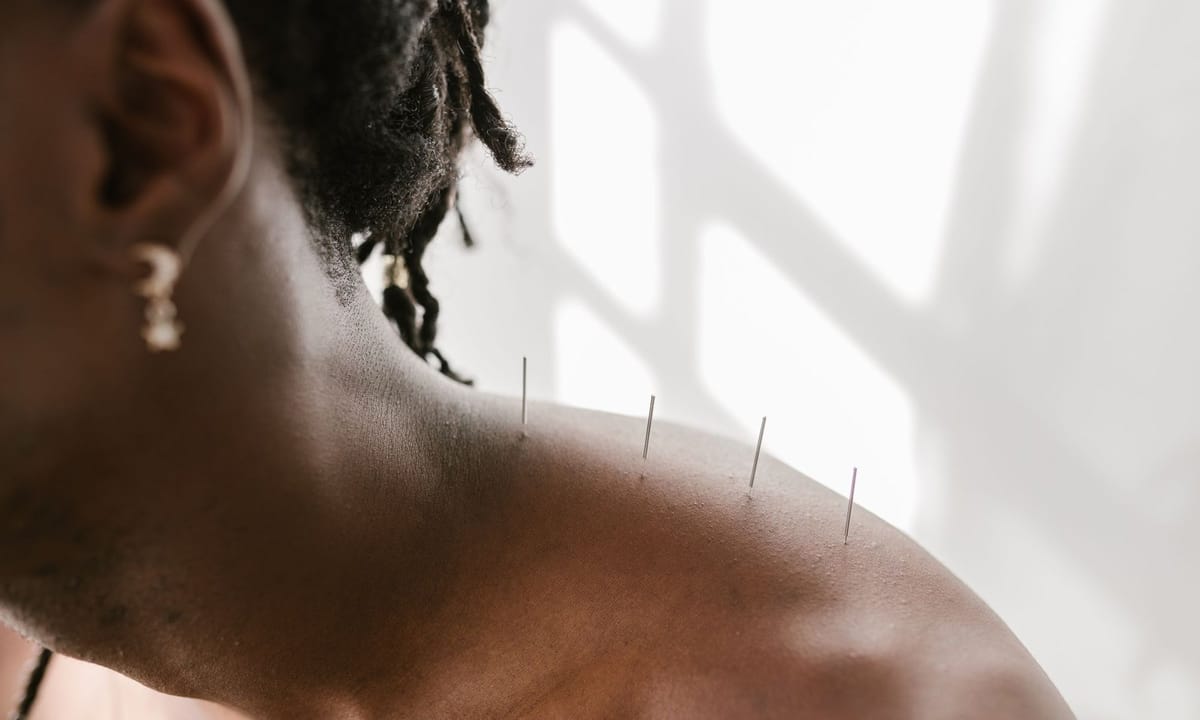
Acupuncture is the practice of inserting very fine sterile needles at specific points on the body. The needles are nothing like the ones used to draw blood. They are closer in width to a human hair, they are single use, and they are disposed of after your session.
Acupuncture comes out of Traditional Chinese Medicine, which reads the body as one connected system rather than a list of separate parts. In practice that means an acupuncturist asks about your sleep, digestion, stress, and energy even when you came in about your shoulder.
Is Acupuncture Only About Needles?
Needles are the core of an acupuncture session, but they are rarely all of it. A treatment at Flex Physio & Wellness often draws on other Traditional Chinese Medicine techniques, chosen to match what you need on the day.
Depending on the session, your acupuncturist may also use fire cupping, acupressure, TDP lamp heat therapy, electrostimulation, or gua sha. Each of these is a recognized technique in its own right, and they are used to support the needling rather than replace it.
So a session is often more varied than the word acupuncture suggests. Your acupuncturist decides which of these fit your treatment, and none of them are added without explaining what they are for first.
What Conditions Do People Come In For?
People book acupuncture in Grande Prairie for a wide range of reasons. Some of the more common ones:
Ongoing pain, including neck, back, and joint pain
Headaches and migraines
Digestive complaints
Stress, low mood, and anxiety
Sleep that will not settle
Concerns related to women’s health, including cycle related symptoms
Tension that keeps returning after it has been treated other ways
The Registered Acupuncturist at Flex Physio & Wellness has a particular interest in digestion, mental health, and women’s health, and each session begins with an assessment to work out which techniques suit you.
Acupuncture is not a guaranteed fix for any of these, and any clinic promising one is overselling. What it offers is a different approach, and one that often sits well alongside physiotherapy or massage rather than instead of them. If pain has been part of your life for a long time, our post on chronic pain management options in Grande Prairie covers how the pieces fit together.
Is Acupuncture Regulated in Alberta?
Yes, and this is a real difference between acupuncture and some of the other therapies you might be comparing it against.
Acupuncture is a regulated health profession under Alberta’s Health Professions Act. The College of Acupuncturists of Alberta sets the standards, and anyone using the title acupuncturist or Registered Acupuncturist must be registered with the College and hold a valid practice permit. Those titles are protected in law, and a practice permit must either be displayed where acupuncture services are provided or be made available for inspection on request.
So when you book acupuncture anywhere, it is entirely reasonable to ask whether the practitioner is registered with the College. At Flex Physio & Wellness, treatment is provided by a Registered Acupuncturist.
What Happens at Your First Acupuncture Session?
The first appointment is mostly conversation before anything else happens:
An intake covering your main concern, health history, sleep, digestion, stress, and any medications
An assessment to decide which points and techniques are appropriate for you
Needle placement, which takes only a moment per point
A rest period with the needles in place, which is when most people are surprised by how relaxed they get
Removal, then a short conversation about what to expect afterwards and when to come back
You stay clothed apart from the areas being treated, and you can ask questions the entire time.
Two questions come up constantly: how many needles, and how long does it take. The number of points used and how long the needles stay in place depend on what you need that day. Flex Physio & Wellness offers a one hour acupuncture appointment that covers both assessment and treatment, and a thirty minute follow up appointment, and both can be booked online.
Does Acupuncture Hurt?
Acupuncture does not hurt in the way most people brace for.
The needles are extremely fine, and insertion is often not felt at all. What people do notice is a dull heaviness, a warm spot, or a mild ache around a point once the needle is in place. That sensation is normal and usually settles within moments.
Afterwards, some people feel tired or a little spacey. Others feel noticeably lighter. Drinking water and taking the rest of the evening at a slower pace is a sensible plan after a first session. Minor bruising at a needle site happens occasionally and fades on its own.
How Is Acupuncture Different From IMS Dry Needling?
The difference between acupuncture and IMS dry needling causes genuine confusion, because both use fine needles and both are available at our clinic.
Acupuncture is rooted in Traditional Chinese Medicine and is provided by a Registered Acupuncturist. Points are selected from a whole body assessment, and the needles are typically left in place for a period of time.
IMS dry needling is a physiotherapy technique. A physiotherapist with additional training targets tight bands within a muscle to release them, and the needle generally goes in and comes back out rather than staying in place. The reasoning behind point selection is anatomical rather than based on Traditional Chinese Medicine.
Both can help with pain and tension. They are different treatments delivered by different professionals, and one is not a substitute for the other. You can read more about IMS dry needling, or about what to expect at your first dry needling appointment.
Who Should Be Cautious About Acupuncture?
Acupuncture is generally well tolerated, but it is not automatically right for everyone. Tell your acupuncturist before treatment if any of the following apply:
You are pregnant or think you might be, since certain points are avoided during pregnancy
You take blood thinners or have a bleeding disorder
You have a pacemaker or another implanted electrical device
You have a condition or medication that affects your immune system
You have a skin infection or an open wound at the area being treated
None of these automatically rule acupuncture out. They change how the treatment is planned, which is exactly why the intake happens first. If you are being treated for a medical condition, keep your physician in the loop as well.
What About Cosmetic Acupuncture?
Cosmetic acupuncture is a separate service with a different goal. Clinical acupuncture is aimed at symptoms such as pain, digestion, or sleep, while cosmetic acupuncture focuses on the face and skin. Booking the right one saves everybody a conversation at the front desk.
Is Acupuncture Covered by Insurance?
Many extended health plans include acupuncture, though coverage varies more than it does for physiotherapy or massage therapy. Some plans cover acupuncture only when it is provided by a Registered Acupuncturist, and some hold a separate annual maximum for it.
Flex Physio & Wellness direct bills most major extended health providers. Checking your plan before a first visit is worth the phone call, and our direct billing page explains how the process works.
Booking, Billing, and Where to Find Us
Flex Physio & Wellness is a physiotherapy and wellness clinic in Grande Prairie, Alberta. You can find us at 201, 9625 97 Street, Grande Prairie, AB T8V 8B9. You can book an acupuncture appointment online, or call (587) 771-3045 with questions first. No referral is needed, and we direct bill most major extended health plans. You are also welcome to contact us if you are not sure whether acupuncture is the right starting point.
Physiotherapy, massage therapy, and kinesiology all run out of the same building, which matters more than it sounds like it should. Plenty of people in the Peace Region end up combining two of them, and having everything under one roof means the plan stays joined up instead of scattered across town.
Frequently Asked Questions
How Many Acupuncture Sessions Will I Need?
The number of acupuncture sessions depends on the concern being treated and how long it has been present. Recent problems often respond in fewer visits than long standing ones, and a course of treatment is normally reviewed as it goes rather than fixed at the start. A Registered Acupuncturist can give a clearer estimate after the first assessment.
How Long Is an Acupuncture Appointment?
Flex Physio & Wellness offers two acupuncture appointment lengths: a one hour appointment that covers both assessment and treatment, and a thirty minute follow up appointment. The number of needles used and how long they stay in place depend on what is being treated. Both options can be booked on the online booking page.
Is Acupuncture Safe?
Acupuncture performed by a Registered Acupuncturist using sterile single use needles is considered low risk. The most common side effects are minor bruising at a needle site, brief tiredness, or a short lived increase in symptoms before improvement. Anyone who is pregnant, takes blood thinners, has a bleeding disorder, or has an implanted electrical device should say so before treatment so the session can be adapted.
Do I Need a Referral for Acupuncture in Grande Prairie?
No referral is needed to book acupuncture at Flex Physio & Wellness in Grande Prairie. Some extended health plans require a physician note before they will reimburse acupuncture, so checking the specific benefits plan before a first appointment is still worthwhile.
What Is the Difference Between Acupuncture and Dry Needling?
Acupuncture is delivered by a Registered Acupuncturist and selects points from a whole body assessment rooted in Traditional Chinese Medicine, with needles usually left in place for a period of time. IMS dry needling is a physiotherapy technique in which a trained physiotherapist targets tight bands within a muscle, generally inserting and removing the needle rather than leaving it. Both use fine needles, but the training, the reasoning, and the technique differ.
Can I Have Acupuncture While Pregnant?
Acupuncture during pregnancy is possible, but certain points are avoided and the treatment is adapted, so telling the acupuncturist about a known or suspected pregnancy before treatment is essential. Anyone who is pregnant and considering acupuncture should also keep their maternity care provider informed.
What Should I Do After an Acupuncture Session?
After an acupuncture session, drinking water and keeping the rest of the day at a slower pace is a sensible approach, particularly after a first treatment. Feeling tired, relaxed, or slightly light headed for a short period afterwards is common. Minor bruising at a needle site can occur and generally fades without any treatment.