
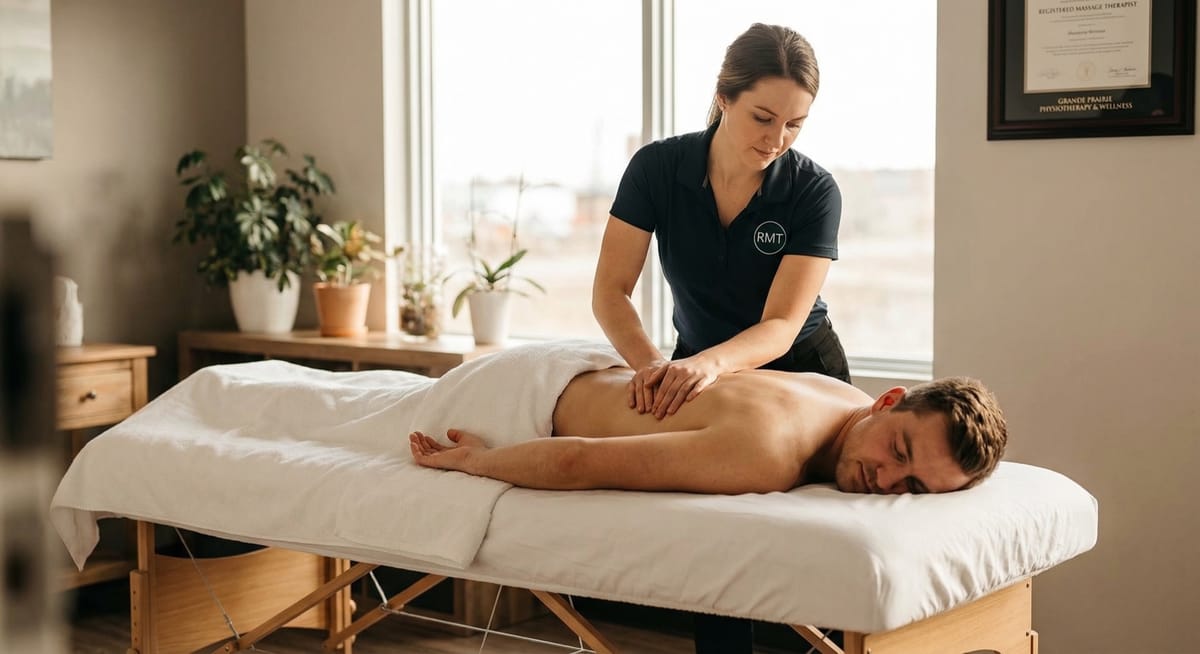
If you are looking for massage therapy in Grande Prairie, one of the first questions you may run into is simple: should you book deep tissue massage or relaxation massage?
The honest answer is that both can be helpful, but they are not designed for the exact same goal. Deep tissue massage is usually more focused and specific. Relaxation massage is usually calmer and broader. Neither is automatically better. The better choice depends on why you are booking, how much pressure you prefer, and whether your main goal is targeted muscle work or a more calming full-body treatment.
At Flex Physio & Wellness, our registered massage therapists work with people across Grande Prairie and the Peace Region who are dealing with everything from desk-related neck tension to physically demanding work, sports soreness, stress, and general tightness. Here is how to decide which appointment may fit best. If you are not sure what the Registered Massage Therapist credential covers in Alberta, or how it affects a benefits claim, see our guide to registered massage therapists in Grande Prairie.
Quick Comparison
Deep tissue massage is generally best when you want more focused work on a specific area, such as the neck, shoulders, upper back, low back, hips, or legs. It often uses slower, firmer pressure and may focus on deeper layers of muscle and connective tissue.
Relaxation massage is generally best when you want to reduce overall tension, unwind, and leave feeling calmer. It often uses lighter to moderate pressure, flowing techniques, and a steady rhythm that supports relaxation.
A useful way to think about it: deep tissue massage is more targeted, while relaxation massage is more calming.
When Deep Tissue Massage May Be a Better Fit
Deep tissue massage may be a good option if your main concern is specific muscle tension or stiffness that keeps returning. This can include tight shoulders after long hours at a computer, low back tension after physical work, or leg tightness from training, sports, or being on your feet all day.
People often choose deep tissue massage when they want:
Focused pressure on a specific area
Support for neck, shoulder, back, hip, or leg tension
Help with postural strain from desk work, driving, or repetitive movements
A treatment that feels more therapeutic than purely relaxing
Work on tight muscles after activity, training, or physically demanding jobs
Deep tissue does not mean “as much pressure as possible.” Good deep tissue massage should still be controlled, communicative, and within your comfort level. You should be able to breathe normally and ask your RMT to adjust pressure at any time.
If you have a recent injury, medical condition, fever, infection, blood clot risk, recent surgery, unexplained pain, or symptoms that are getting worse, it is important to mention this before treatment. Your massage therapist can adapt the appointment or recommend that you speak with another healthcare provider first.
When Relaxation Massage May Be a Better Fit
Relaxation massage may be the better choice if your main goal is to feel calmer, reduce general tension, or give your body a break. This can be especially helpful when you feel tense everywhere rather than having one specific problem area.
People often choose relaxation massage when they want:
A calmer, gentler treatment
General stress and tension relief
A reset after a busy week
Support for overall wellness and self-care
Lighter to moderate pressure instead of firm targeted work
Relaxation massage can still address tight muscles. It simply does so with a different pace, pressure, and intention. If you are nervous about massage, sensitive to pressure, or unsure what your body will tolerate, relaxation massage can be a comfortable starting point.
Pressure, Comfort, and Soreness: What to Expect
Pressure is one of the biggest differences between deep tissue and relaxation massage, but it should always be adjustable.
With deep tissue massage, you may feel stronger pressure, especially in areas that are tight or sensitive. Mild soreness after treatment can happen for some people, similar to how muscles can feel after exercise. That soreness should usually be temporary.
With relaxation massage, the pressure is typically lighter to moderate and the appointment should feel calming. You may still notice areas of tension, but the goal is not to push through discomfort.
In either type of massage, communication matters. If the pressure is too much, say so. If you want more pressure, say that too. Your appointment should be adjusted to your goals and tolerance.
Which Massage Is Better for Neck and Shoulder Tension?
Neck and shoulder tension is one of the most common reasons people book massage therapy in Grande Prairie. It can come from desk work, long driving hours, lifting, trades work, sports, winter shovelling, stress, or a mix of all of the above.
Deep tissue massage may be a good fit when the tension feels specific, stubborn, or connected to certain muscles in the upper back, shoulders, or neck. Relaxation massage may be a better fit when the tension feels more general or stress-related.
Sometimes the best option is a blend. Your RMT may use deeper work in a few focused areas, then use more calming techniques through the rest of the appointment.
Can You Combine Deep Tissue and Relaxation Techniques?
Yes. Many massage appointments are not strictly one style from start to finish. A registered massage therapist can adjust the session based on what you need that day.
For example, you may want focused work on your shoulders and upper back, but a calmer approach through the rest of the body. Or you may book relaxation massage, then ask for a little more pressure in one specific area.
This is why your goals matter. Before treatment, tell your RMT what you are hoping to get from the appointment, what areas feel tight, and what pressure you usually prefer.
How to Choose the Right Massage
Choose deep tissue massage if you are booking for targeted muscle tension, stiffness, or a specific area that feels restricted.
Choose relaxation massage if you are booking for stress relief, general tension, nervous system calming, or a gentler experience.
Choose a blended approach if you want both targeted work and a calmer overall appointment.
If you are unsure, you do not need to figure it out alone. Book massage therapy and explain your goals at the start of the appointment. Your RMT can help guide the treatment style.
Massage Therapy at Flex Physio & Wellness
Flex Physio & Wellness offers massage therapy in Grande Prairie for people looking for both therapeutic and relaxation-focused care. Our team can help you decide between deep tissue massage, relaxation massage, and other options based on your goals, comfort level, and current symptoms.
To compare other massage therapy options, read our complete guide to massage therapy in Grande Prairie, or contact Flex Physio & Wellness to book an appointment.
Frequently Asked Questions
What is the main difference between deep tissue and relaxation massage?
Deep tissue massage usually uses firmer, more targeted pressure to address specific areas of muscle tension or stiffness. Relaxation massage is typically gentler and uses flowing techniques to support stress relief, general comfort, and whole-body relaxation.
Is deep tissue massage supposed to hurt?
Deep tissue massage can feel intense, but it should not feel unbearable. You should be able to breathe comfortably and ask your massage therapist to adjust pressure at any time. Some mild soreness after treatment can happen, but treatment should stay within your tolerance.
Which massage is better for stress?
Relaxation massage is often the better starting point when your main goal is stress relief, general tension reduction, or nervous system calming. Deep tissue techniques can still be used selectively if there are specific tight areas you want addressed.
Which massage is better for neck and shoulder tension?
Either style may help, depending on the cause and intensity of the tension. Deep tissue massage may be useful for focused tightness in the neck, shoulders, or upper back, while relaxation massage may be better when the tension is connected to stress or overall fatigue.
Can I ask my massage therapist to adjust the pressure?
Yes. You can ask for more or less pressure at any point during your appointment. Good massage therapy should be responsive to your goals, comfort level, and how your body feels during treatment.
How do I know which massage to book?
If you want focused work on tight or sore muscles, deep tissue massage may be the better fit. If you want a calmer appointment for stress, general tension, or relaxation, relaxation massage may be best. If you are unsure, book massage therapy and discuss your goals with your RMT.